

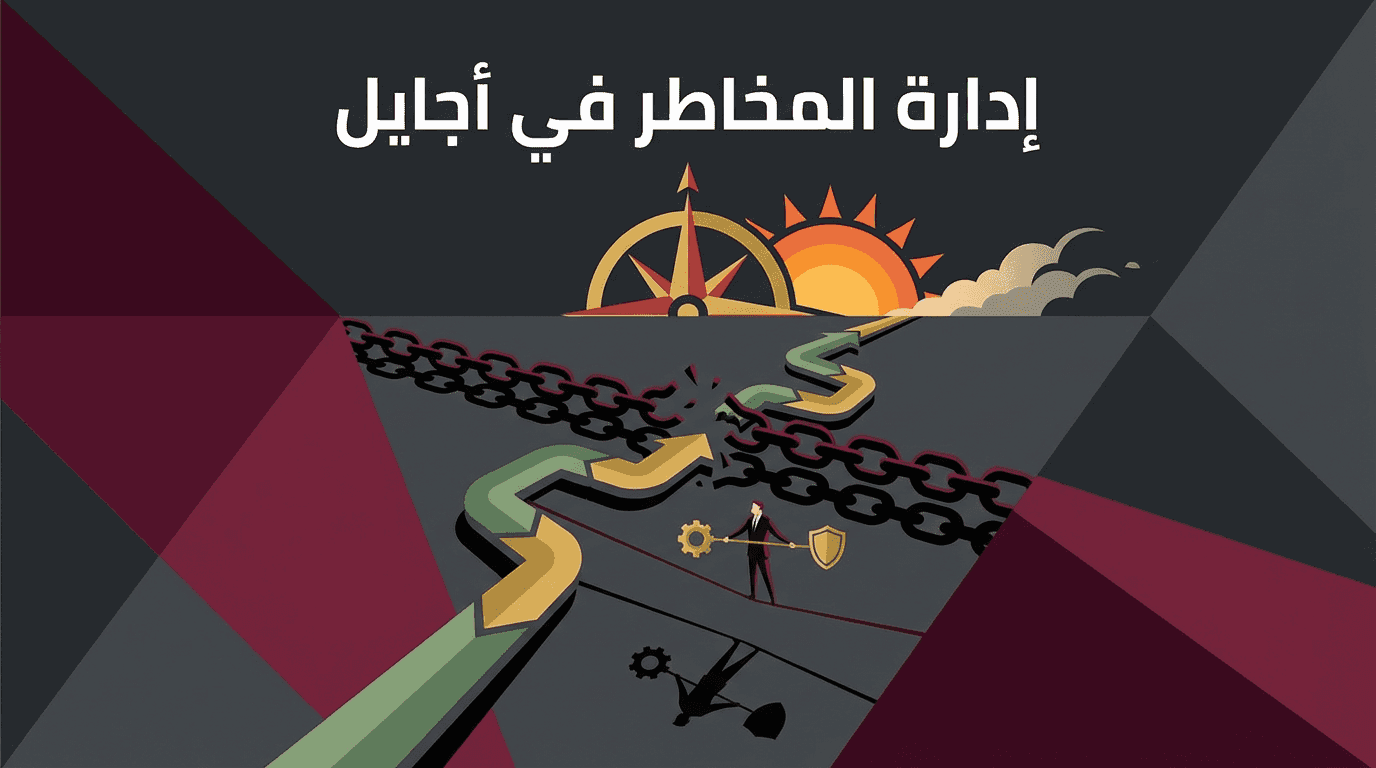
Agile methodologies present themselves as a flexible option capable of handling continuous change, serving as a sanctuary for teams working in fast-evolving environments. However, despite its advantages, this approach is not without loopholes that disrupt risk management when not handled with awareness and discipline. Between the rapid pace of delivery, shifting customer requirements, and the absence of detailed documentation, hidden gaps emerge that may sneak into the project unnoticed.
Scope Creep: Risks Growing Silently
Constant reviews and changing requirements can cause the project scope to swell gradually. This often happens because teams treat variables as a natural part of Agile without having strict controls to keep the scope within its limits. With the repetition of “small requests,” the load multiplies until teams find themselves facing a project larger than their planned capacity, leading to delivery delays and resource overruns.
Unrealistic Expectations: When Does the Client Become the Greatest Source of Risk?
When expectations are built on unclear requirements, or when client priorities shift at a pace that does not allow for deliberate re-planning, teams become trapped between what can actually be implemented and what the client imagines. This gap can cost the project its reputation and place teams under pressure that serves neither quality nor sustainability.
Communication Gaps Within Teams
Because Agile fundamentally relies on continuous interaction, any stumble in communication—whether due to different time zones, internal conflicts, or lack of coordination—makes real-time decision-making difficult. In a fast-paced environment, the absence of the right information at the right time leads to cumulative deviations that are hard to track later.
Stakeholder Participation: When Influential Opinions are Missing
Agile requires an active and continuous presence from stakeholders. When this is not achieved, the team becomes restricted to making incomplete decisions, and the product is built on assumptions rather than data. This gap can lead to a product that does not reflect the client's actual needs, which is a costly risk.
Accumulation of Technical Debt: The Hidden Price of Speed
The rhythm of short sprints may drive some teams to choose solutions that “save the moment” rather than solutions that build engineering sustainability for the project. Over time, this technical debt inflates, beginning to affect product quality, team efficiency, and development speed. Worst of all, it consumes future resources that were not taken into account.
Absence of a Formal Risk Framework
Agile frameworks, such as Scrum, do not provide clear risk management mechanisms similar to those in traditional planning methodologies. Although iteration helps in the early detection of some challenges, it is no substitute for an institutional framework that ensures the monitoring of strategic and organizational risks that do not appear within the scope of a single sprint.
External Risks: The Space Agile Does Not Cover
Market changes, compliance obligations, parallel projects, and dependencies with suppliers are all risks that Agile's internal mechanisms are insufficient to manage. Here, project success becomes contingent on integrating Agile with a broader risk governance system that deals with the full picture rather than fragmented parts.
Estimation of Time and Resources: A Recurrent Challenge
As requirements change, sprint estimates become more volatile. This creates pressure on the team and increases the likelihood of missing deadlines or exhausting resources. This risk remains as long