

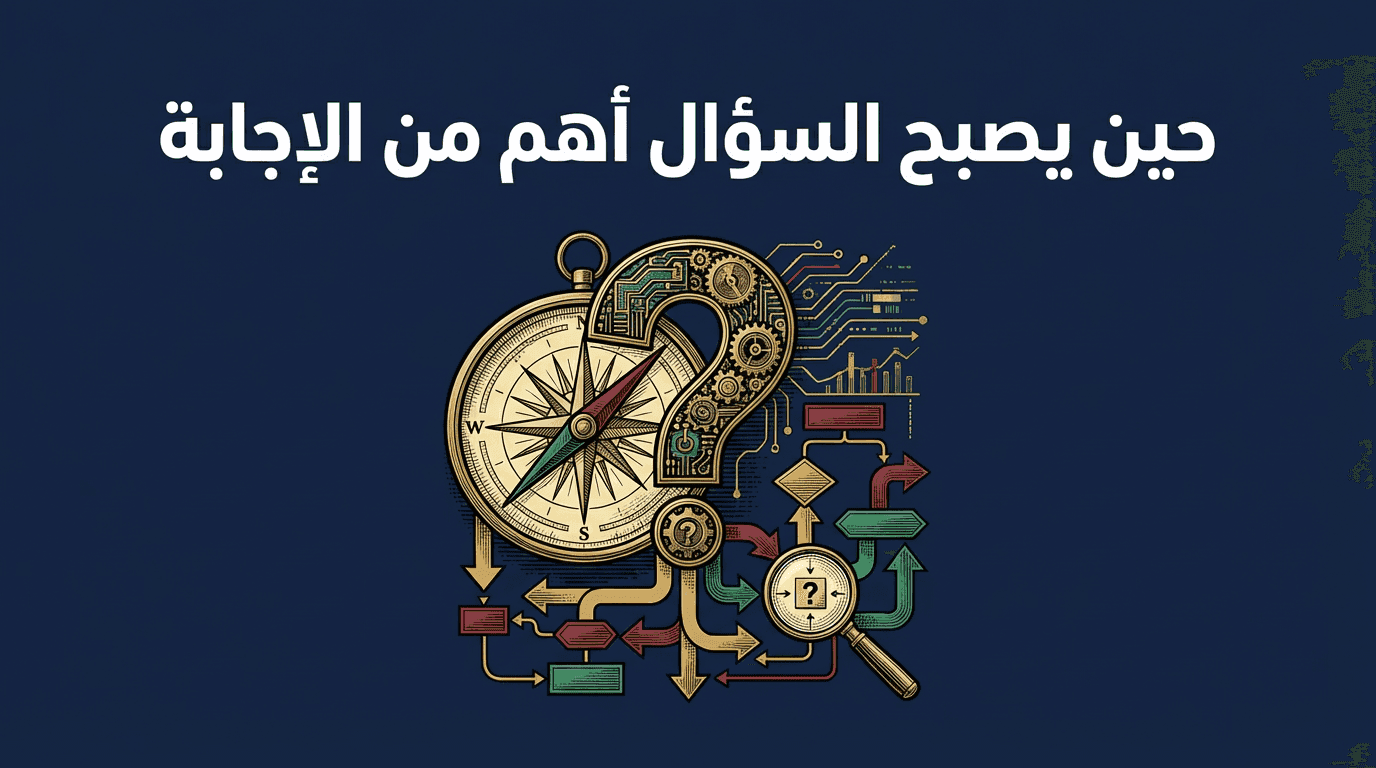
In the world of management and leadership, many believe that success depends on the ability to provide quick answers and direct solutions. However, the truth is that the most influential leaders do not always possess the answer; rather, they know how to ask the right question at the right moment. A good question does not merely uncover facts, but opens new pathways for understanding, stimulates collective thinking, and rearranges priorities.
The Question That Changes the Course of Dialogue
Imagine a tense meeting for a project that is delayed and under a strained budget. Some might rush to place blame or search for justifications, but a wise leader pauses and asks: What is truly standing in our way?
With this simple question, the conversation shifts from defensiveness and blame to the pursuit of actual solutions.
With this simple question, the conversation shifts from defensiveness and blame to the pursuit of actual solutions.
Lessons from Global Leaders
- Doug Conant – Campbell Soup: When he took over leadership, satisfaction levels were at their lowest. He did not start with complex plans, but with direct conversations with employees. He asked them: What prevents you from doing your best work? Thanks to this simplicity, he was able to restore trust and lead a profound transformation.
- Steve Jobs – Apple: In a meeting filled with projects, he stopped his team and asked: Which of these projects do we truly believe in? A moment of silence was followed by a fateful decision to cut 70% of products and focus on what was essential, marking the beginning of Apple's return to leadership.
- Herb Kelleher – Southwest Airlines: Amidst a lengthy debate about adding a new meal service on board, he asked: Does this decision help us be the lowest-fare airline? The answer was no, and the argument ended immediately.
These examples reflect how a targeted question can expose what is essential and clear a path through ambiguity.
The Art of Crafting a Question
Effective questioning is not entirely spontaneous; it requires a clear purpose, precise phrasing, and proper timing. Among the most prominent rules are:
- Be clear on the purpose: Are you seeking to uncover an obstacle, define a priority, or motivate the team?
- Ask one question at a time, and do not bundle it with a package of questions that confuse the other party.
- Challenge assumptions: Do not settle for ready-made answers; dig deeper.
- Embrace the silence: Often, the smartest answers come after moments of reflection.
- Involve everyone: Questions open the door for participation and give the team a sense of ownership over the decision.
A Question That Might Change Your Course
The next time you face a complex challenge, do not rush to provide the solution. Ask: What are we not seeing yet? or How can we reframe the problem differently?
You may discover that the right question is the compass that guides the team back to the correct path.
You may discover that the right question is the compass that guides the team back to the correct path.
In the end, leadership is not just about possessing the right answer, but about having the courage to ask the question that guides the compass. Sometimes, the question is more important than any answer.