

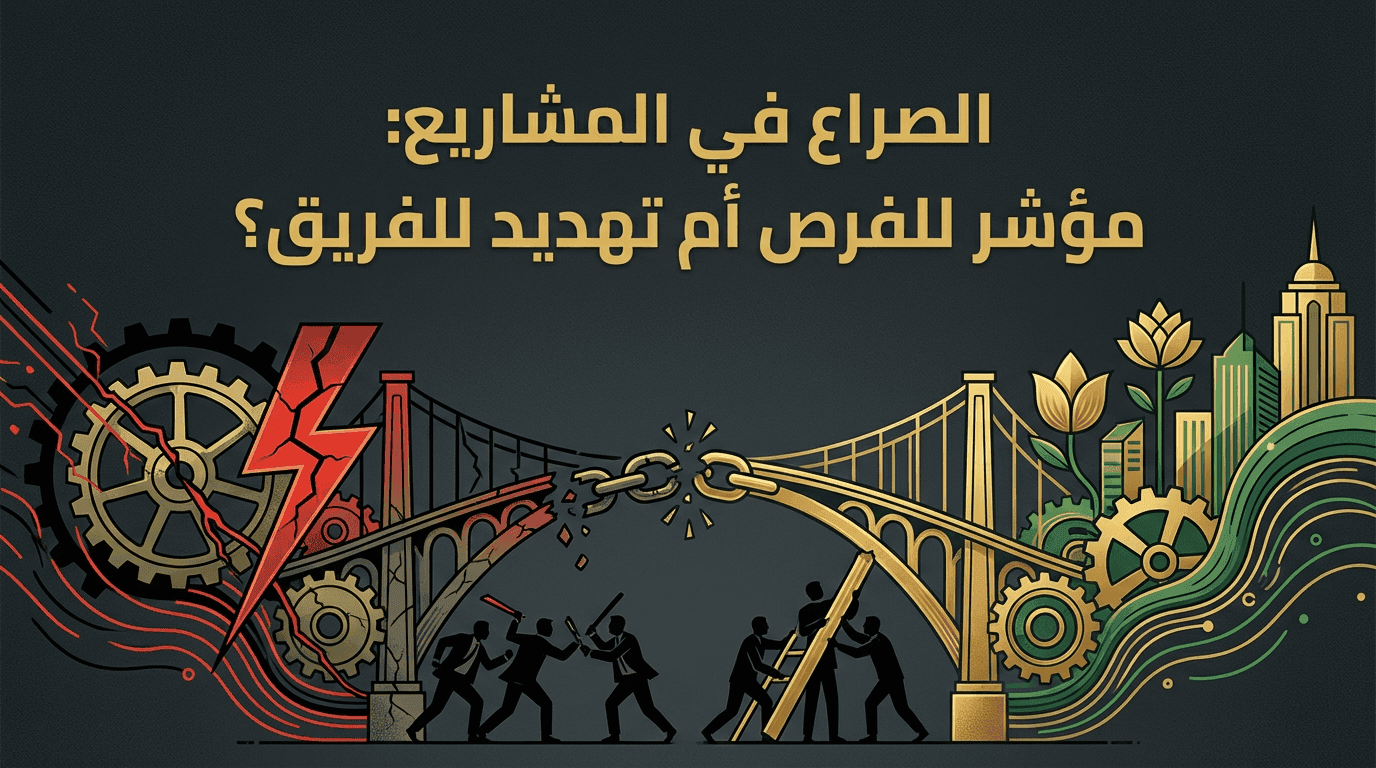
In project management, conflict is often viewed as an obstacle that must be avoided at all costs. Charged meetings, heated discussions, or even a tense silence within the team are all manifestations that cause anxiety.
But what if conflict is an indicator of opportunities, and not just a threat? Can tension be transformed into a driver for innovation and better decision-making?
But what if conflict is an indicator of opportunities, and not just a threat? Can tension be transformed into a driver for innovation and better decision-making?
1️⃣ Understanding the Types of Conflict
Conflict in projects is not homogeneous; it can be divided into three main types:
- Task or Functional Conflict: Differences in vision regarding how to accomplish a specific task. This is often positive if managed wisely, as it stimulates critical thinking and innovation.
- Relationship or Emotional Conflict: Tensions arising from differences in personalities or values. This type is often negative, draining energy and impacting cohesion.
- Process or Structural Conflict: Concerns methods, roles, or resource allocation. It can be turned into an opportunity to improve processes if addressed strategically.
Practical Example: In a new product development project, the marketing and engineering teams might disagree on feature prioritization. This is a task conflict that can generate innovative solutions if the discussion is conducted in a constructive manner.
2️⃣ Conflict as an Indicator of Opportunities
Conflict is not always negative; rather, it can be an early warning system that highlights areas of dysfunction or missed opportunities.
Indicators that conflict can be an opportunity:
Indicators that conflict can be an opportunity:
- Natural variance of ideas among team members.
- The emergence of unconventional solutions as a result of discussions.
- Enhancing mutual understanding between different departments regarding project priorities.
Question for Reflection: Does a team whose members never disagree create innovative projects, or do they just execute what is familiar?
3️⃣ Conflict as a Threat to the Team
If left unmanaged, conflict can turn into a real predicament:
- Low morale and increased stress levels.
- Wasted time in futile arguments.
- Risk of team fragmentation or loss of trust among members.
The difference between useful and harmful conflict lies in management, timing, and the method of dialogue.
4️⃣ Conflict Management Strategies
To transform conflict into an opportunity, some practical practices can be followed:
- Identify the type of conflict quickly: Is it related to tasks, relationships, or processes?
- Encourage open communication: Structured meetings and guided discussions help defuse tension.
- Apply the mediation approach: The manager or team leader must act as a neutral mediator to bring viewpoints closer together.
- Foster corporate culture: Teams that build a culture that values diversity and learns from mistakes see conflicts transform into tools for growth.
- Follow up on outcomes: Ensure that agreed-upon solutions are actually implemented and improve performance.
Tip: Do not focus on who "won" the argument, but on what added value to the project.
Conclusion
Conflict in projects is not always an enemy; rather, it is a mirror of your team and your methodologies. The key is the ability to distinguish between the different types of conflict and manage them in a way that makes the team stronger, decisions wiser, and projects more successful.
Ultimately, the real question is not "How do we avoid conflict?", but "How do we transform conflict into an opportunity?".