In a world where decisions are accelerating and profit-and-loss calculations are becoming more complex, a fundamental question stands before leaders:
Can financial success be achieved without compromising ethical principles?
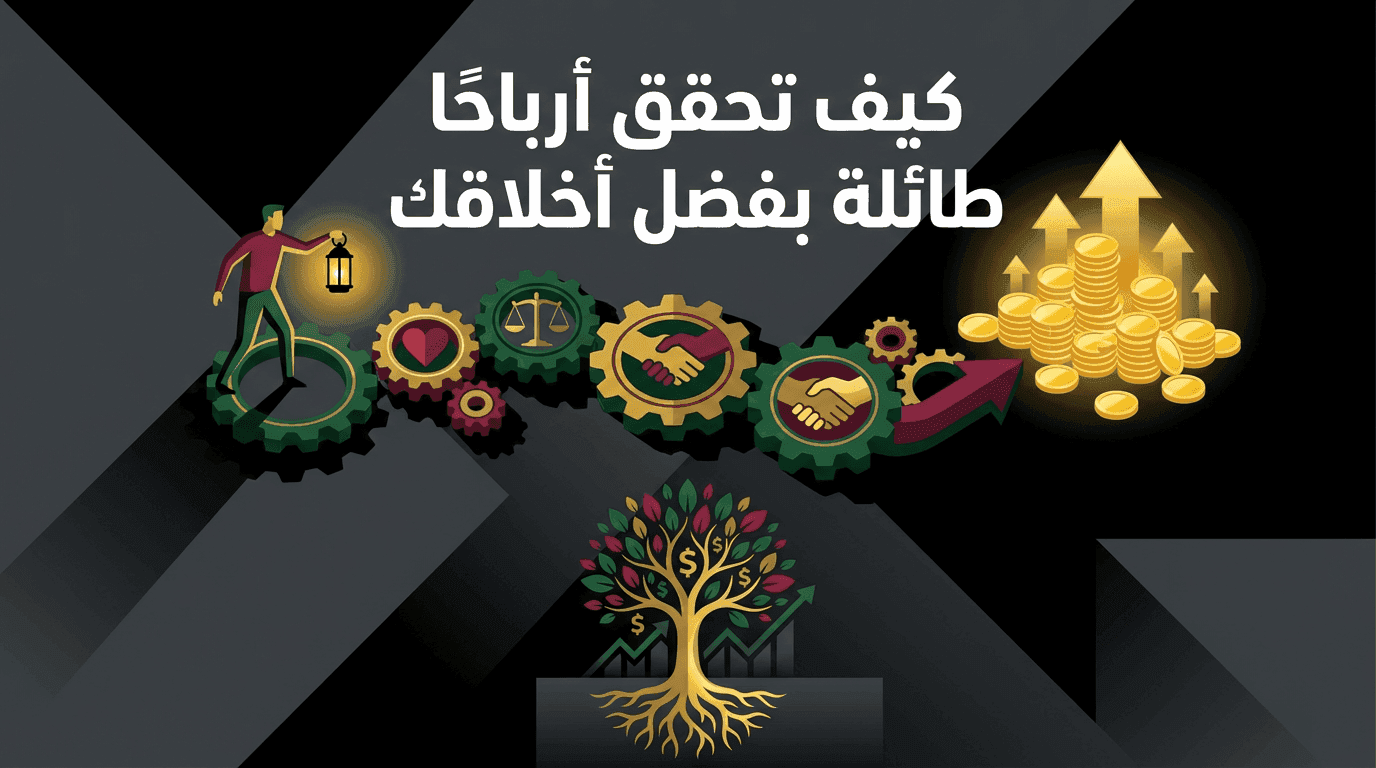
The truth is that ethics in the business world are no longer a luxury or a public relations slogan, but have rather become a strategic pillar for building strong, resilient, and prosperous organizations over the long term.
As the famous investor Warren Buffett once said:
"Ethical leadership is not just a fleeting virtue, but a long-term investment that reaps its rewards over the years."
A Lesson from History: When Success Becomes a Burden
In 2015, the automotive industry was shaken by a global scandal after one of the largest companies resorted to manipulating emissions test results.
At the time, the decision seemed like a smart move to achieve sales targets, but it turned into an ethical and economic disaster.
Tens of billions of dollars evaporated in fines, and trust that took decades to build vanished.
The most important lesson? Sacrificing principles for temporary gains is not a shortcut, but rather the end of the road.
At the time, the decision seemed like a smart move to achieve sales targets, but it turned into an ethical and economic disaster.
Tens of billions of dollars evaporated in fines, and trust that took decades to build vanished.
The most important lesson? Sacrificing principles for temporary gains is not a shortcut, but rather the end of the road.
Why Have Ethics Become a Business Strategy?
In an era of transparency and awareness, ethical values have become a genuine competitive advantage.
Consumers today do not just buy a product; they buy the story of the company behind it.
Ethical leadership creates more stable and influential organizations through:
Consumers today do not just buy a product; they buy the story of the company behind it.
Ethical leadership creates more stable and influential organizations through:
-
Building Trust: The most expensive currency in the market.
Trust can be summarized in two words: transparency and credibility.
It is the foundation upon which long-term relationships with customers and investors are built. -
Attracting Talent: A magnet for capabilities.
The new generation looks for work environments that align with their values, not just for salaries.
Ethical organizations attract and retain creative minds. -
A Priceless Reputation.
Reputation is an intangible asset, but it determines the market value of any organization. -
A Shield Against Risks.
Ethical commitment protects companies from legal, financial, and regulatory crises. -
Sustainable Profitability.
Companies that integrate ethics into their strategy achieve superior financial performance over the long term.
Digital Transformation: The Test of Ethical Leadership
Ethics are no longer tested only in market deals, but also in codes and algorithms.
Leaders today face new dilemmas:
Leaders today face new dilemmas:
- Data: How do we protect user privacy in an era of digital openness?
- Artificial Intelligence: How do we ensure the fairness of algorithms and avoid reinforcing biases?
- Social Media: How do we protect the organization's reputation amidst the chaos of misinformation?
- Supply Chains: How do we ensure fairness in cross-border work environments?
In these challenges, the mettle of true leadership appears: the ability to make the right decision even when it is the hardest.
The Art of Balancing Principle and Profit
The balance between values and profitability does not happen by chance; it requires organizational awareness and a clear leadership system.
To achieve this balance, leaders can adopt the following steps:
To achieve this balance, leaders can adopt the following steps:
- Define your ethical compass: Make values part of the organization's identity, not its slogans.
- Lead by example: Actions speak louder than policies.
- Open the dialogue: Encourage internal discussion and embrace constructive criticism.
- Have courage: Some ethical decisions may cost you today, but they bear fruit tomorrow.
- Be transparent and accountable: Do not fear admitting mistakes, as doing so earns you respect that cannot be bought.
- Invest in the corporate conscience: Integrate ethics into training and rewards.
- Reward integrity: Because ethical behavior is the true metric of leadership.
Conclusion: Ethics Are Not a Cost... But the Capital of the Future
True profit is measured not only by the financial returns an organization achieves, but by the impact, trust, and inspiration it leaves behind.
An ethical leader does not choose between success and values, but rather realizes that values are the surest path to success.
Start defining your values today, and always remember:
An ethical leader does not choose between success and values, but rather realizes that values are the surest path to success.
Start defining your values today, and always remember:
Ethics are not a burden on profit, but its true fuel.