

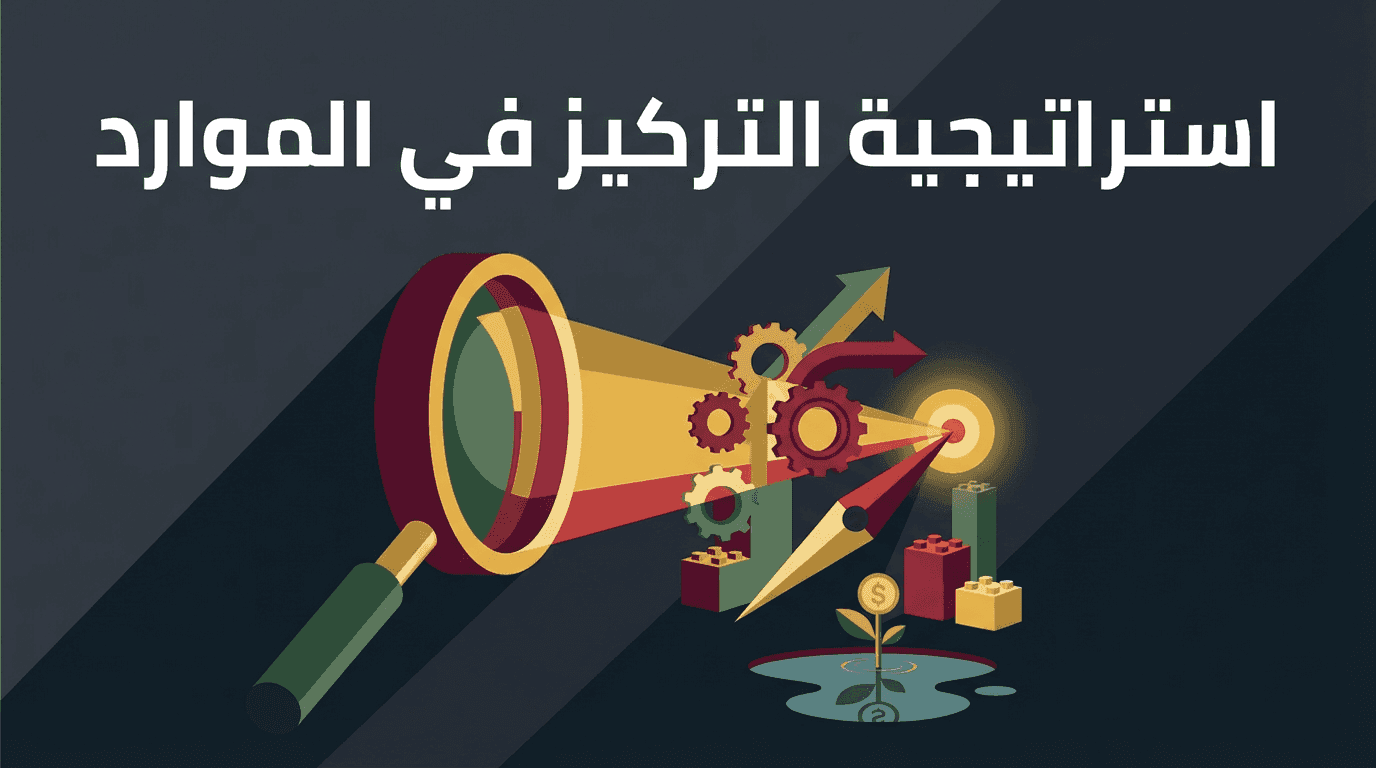
In a world full of challenges, where projects, institutions, and individuals compete for limited resources, the most important question remains: How do we use what we have to achieve maximum impact?
The answer is not in distributing resources equally across everything, but in Focus. Here, the importance of an old—yet still living—military principle emerges, called: Economy of Force.
This principle, which originated on battlefields, is today redefining leadership and management in an era of speed and change.
From Wars to Leadership
In military history, victories did not belong to those who distributed their power with formal fairness, but to those who knew where to place their weight.
Smart armies did not spread their forces along the entire front; they concentrated their effort on a single point that created a breakthrough and turned the tide.
The Germans, for example, during World War II, invented the Blitzkrieg tactic. They did not distribute their tanks across the entire front; they amassed their power on a single axis to penetrate enemy lines with speed and effectiveness.
This principle—despite its military roots—is not exclusive to warfare. It can become a management and leadership philosophy for anyone seeking an impactful achievement with the least possible waste.
Translation into the Corporate World
In management, our resources are not armies, but they are no less important: Time, Human Talent, and Budget. Just as in war, distributing them equally among all tasks may seem logical, but it kills effectiveness and weakens impact.
Economy of Force in management means:
- Concentrating most resources on the Critical Path tasks.
- Applying the minimum necessary effort to secondary tasks.
- Having the courage to say "no" to everything that does not serve the strategic goal.
This is not just technical advice; it is a leadership approach that changes the way of thinking.
Real-Life Examples of Economy of Force
-
Startups: When founders begin their journey, they are tempted to work on all fronts: product development, marketing, and networking. However, the smartest move is to focus effort on the core product until it proves itself in the market, while other activities are managed in simple, phased ways.
-
Large Organizations: Instead of launching ten parallel initiatives that exhaust energy, they choose one strategic initiative and support it with all their weight to create a clear and sustainable impact.
-
On an Individual Level: A manager who writes twenty tasks a day often completes few of them superficially. But a manager who identifies only three priorities and finishes them with focus achieves deeper and more impactful results.
The Leadership Dimension
Leadership is not about distributing effort equally to please everyone. A true leader is one who distributes wisely, choosing a specific battle in which to put all their strength.
Fairness in distribution does not mean effectiveness. On the contrary, distributing resources equally often leads to everyone losing.
Saying "no" here is not a negative rejection, but a strategic decision:
- Every "no" to a marginal task is a "yes" to core priorities.
- Every effort we withdraw from the periphery is concentrated energy at the heart of the goal.
Why Do We Need This Principle Today?
In a fast-changing environment where projects and opportunities multiply, the risk of distraction is greater than ever.
- Institutions that scatter their resources over dozens of projects find themselves in the end without tangible achievements.
- Individuals who run after every task discover that they have exhausted their energy without a real impact.
But those who understand the Economy of Force are those who know that focus is the shortest path to the longest-lasting results.
Conclusion
Wars have taught us that victory is not made by numbers, but by focus. Today, institutions and individuals need this lesson more than ever.
Success is not about doing everything; it is about choosing what is worth doing everything for.
Do not distribute your resources; concentrate them where they create impact.