
Today, organizations are experiencing a reality different from what was once familiar. Quality Management is no longer just a testing phase added at the end of a product or service development cycle; it has become a comprehensive philosophy, intertwined with every step of the workflow, from the inception of an idea to its delivery to the customer.
This shift reflects a new awareness that quality is no longer an organizational luxury or a mere means of regulatory compliance; it is a strategic pillar that determines an organization's ability to compete, build trust, and respond to rapidly changing market variables.
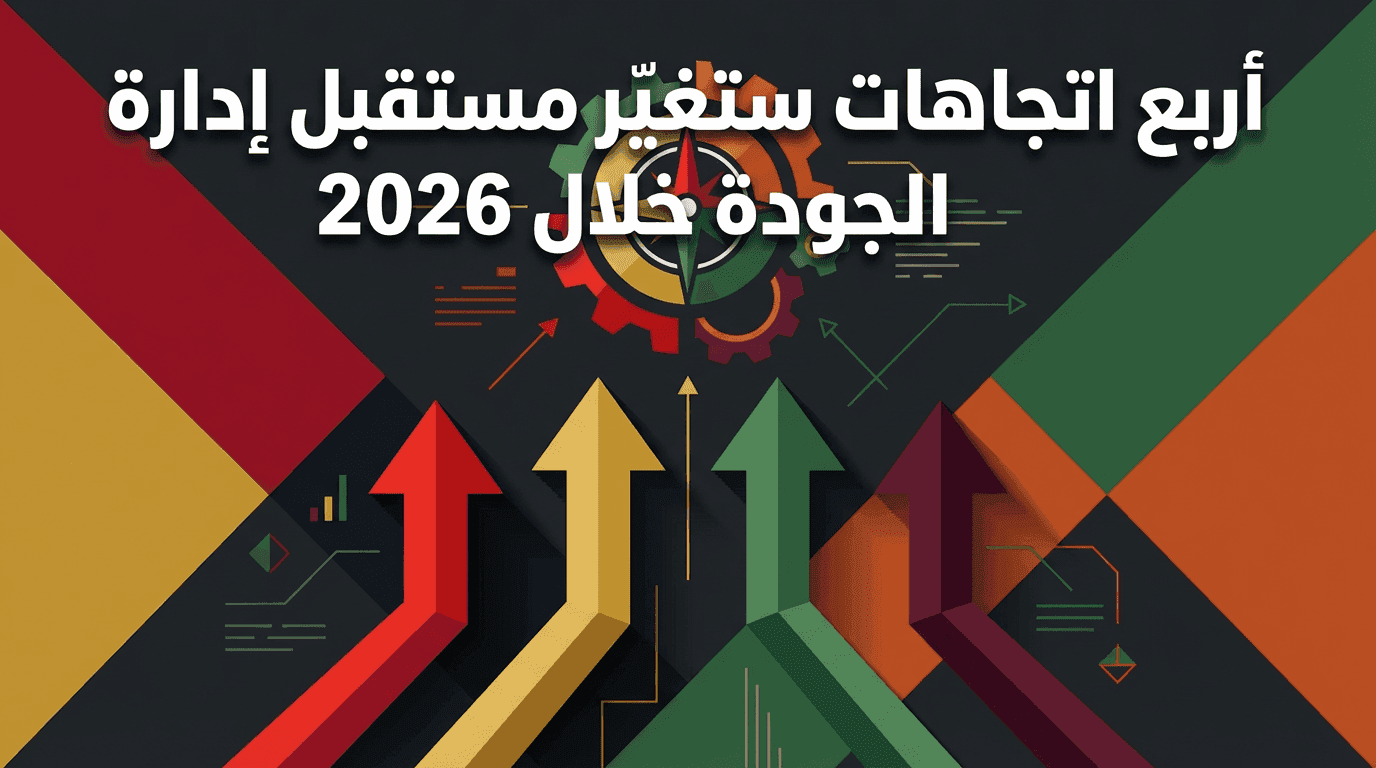
As we approach 2026, four key trends are emerging that will reshape the landscape of quality management in organizations, serving as a reference for every leader or manager seeking excellence in a volatile business environment.
1. Agentic AI: From Assistance to Autonomy
The next generation of artificial intelligence is no longer limited to offering suggestions; it is now capable of making decisions and executing them independently within work environments.
In the context of quality management, this means that agentic AI systems can design tests, execute them, analyze results, and even resolve errors without human intervention.
By 2026, organizations will shift from relying on "digital assistants" to operating environments continuously driven by AI, making quality an embedded element of every process rather than an additional burden.
2. Digital Twins in Service of Quality Prediction
The concept of the Digital Twin is no longer exclusive to heavy industries or factories; it is now strongly present in the software and services sector.
By building virtual replicas that simulate applications, data, and operational systems, organizations will be able to test potential risks before they occur.
This predictive capability will reduce unexpected surprises and increase leaders' confidence in strategic decisions related to the launch of new products or services.
3. Compliance as Embedded Code
Regulations and standards are increasing globally at an unprecedented pace, imposing a massive burden on organizations, especially in the financial, healthcare, and government sectors.
The coming trend is to transform compliance into part of the source code and operational processes, so that policies and laws are integrated into the workflow itself.
In this way, compliance will not be a post-execution review process, but an integral part of the quality cycle, reducing legal risks and ensuring the organization is always audit-ready.
4. Quality as a Business Value
Organizations are no longer measuring the success of quality by the number of defects found or error rates, but by its reflection on customer trust, revenue protection, and brand enhancement.
Quality is gradually transforming into a new business currency, with its impact measured in boardrooms through indicators such as operational downtime, compliance levels, and reduced risk volumes.
This shift will make leaders more aware that investing in quality is not an additional cost, but a strategic tool for creating long-term competitive advantage.
Conclusion
The four trends—Agentic AI, Digital Twin, Embedded Compliance, and Quality as a Business Value—are not just modern technologies or methods; they are strategic transformations that will reshape the role of quality management in organizations.
Organizations that adopt these trends early will not only keep pace with change but will lead the path of transformation, positioning themselves for leadership in a global environment that rewards only readiness and agility.