
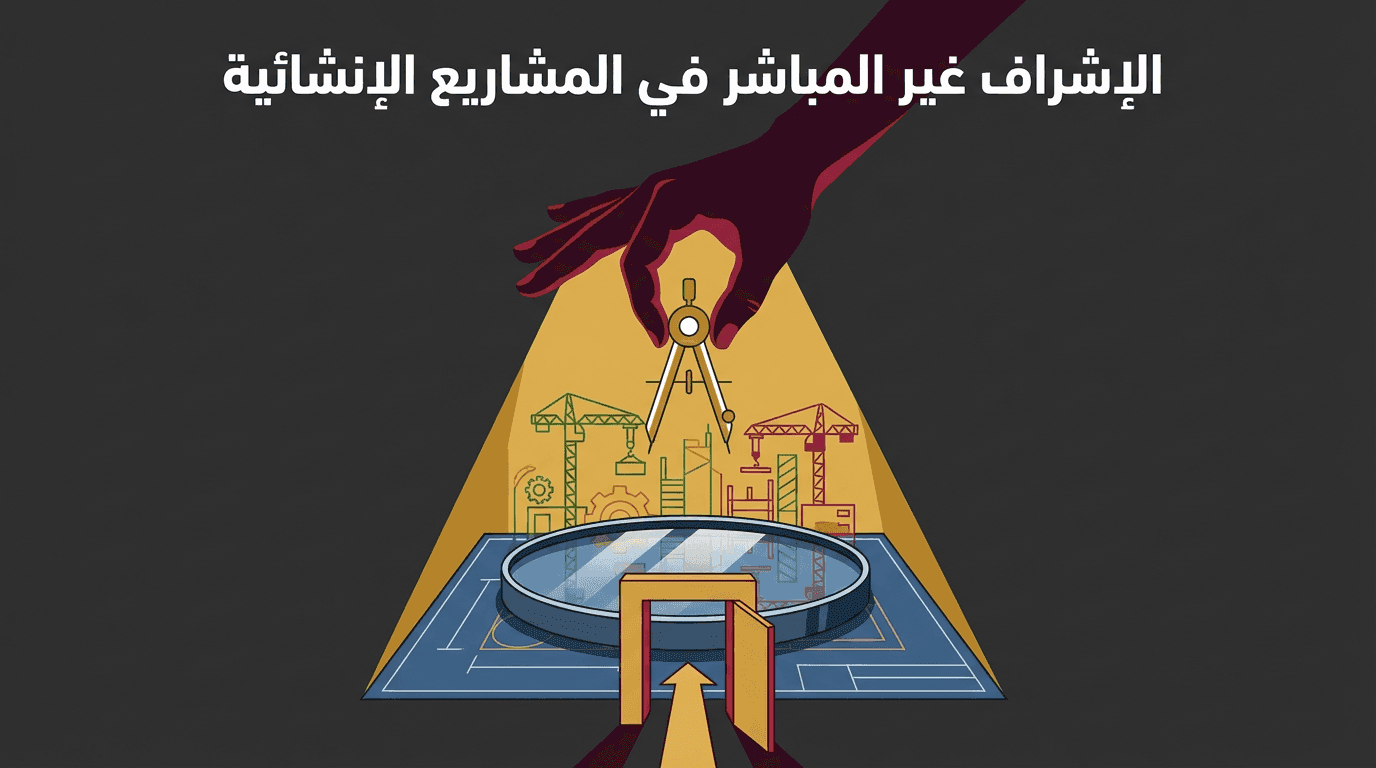
The construction project sector is one of the most complex and sensitive industries, given the multiplicity of parties involved and the overlapping tasks between engineers, contractors, and supervisors. It is assumed that the consultant performs the role of direct supervision to ensure execution quality and the safety of daily operations on-site. However, recent years have seen an increasing shift toward the indirect supervision model, where periodic visits and reporting are considered sufficient without a continuous daily presence. This shift, while it may reduce operational costs, carries real challenges that affect execution quality and project success.
Weak Oversight and Guidance
Weak oversight is one of the most prominent defects of indirect supervision. When the consultant's role is limited to infrequent visits, the executive team loses the immediate support necessary to correct errors or interpret technical details.
A study by McKinsey indicates that about 30% of construction projects are delayed due to poor follow-up and oversight.
Direct supervision is not just about monitoring; it includes daily guidance, providing on-site solutions, and ensuring that engineering standards are accurately applied from the very first moment.
Accumulation of Errors and Problems
Relying solely on periodic reports often leads to a delay in discovering technical problems, making their resolution more complex and costly.
A report issued by Deloitte indicates that 50% of projects exceed their budget due to problems not discovered in a timely manner.
Every day that an error remains undetected increases the likelihood of it worsening and undermines the chances of adhering to the project schedule. Continuous follow-up is the first line of defense against these challenges.
Weak Communication Between Parties
Construction projects are complex environments that require high coordination between several parties. In the absence of daily supervision, communication between work teams declines, leading to misunderstandings or conflicting decisions.
Statistics indicate that 70% of projects suffer from problems resulting from poor communication.
The consultant's physical presence in the field enhances immediate information exchange and creates a work culture based on transparency and cooperation—essential elements for project stability.
Loss of Trust Between Parties
When the supervisor is absent for long periods, contractors and workers feel that they are working without sufficient oversight, which weakens the spirit of commitment and trust in the decisions issued by the consultant.
Mutual trust is the backbone of any successful project; it enhances motivation and ensures commitment to professional standards.
Continuous supervision creates a more balanced relationship between the consultant and the contractor and demonstrates the consultant's dedication to quality, not just procedures.
Toward More Effective Supervision
The optimal solution is a return to direct supervision, with a sufficient number of field engineers from various specialties.
This approach allows for immediate guidance, quality control, and the early detection of problems before they escalate into crises.
According to a study by the Construction Industry Institute, direct supervision improves execution quality by up to 25% and significantly reduces the error rate.
Direct supervision is not a professional luxury; it is a strategic tool for ensuring quality and achieving success. A daily presence on-site enhances execution efficiency, ensures adherence to specifications, and creates a more disciplined and trusted work environment.