

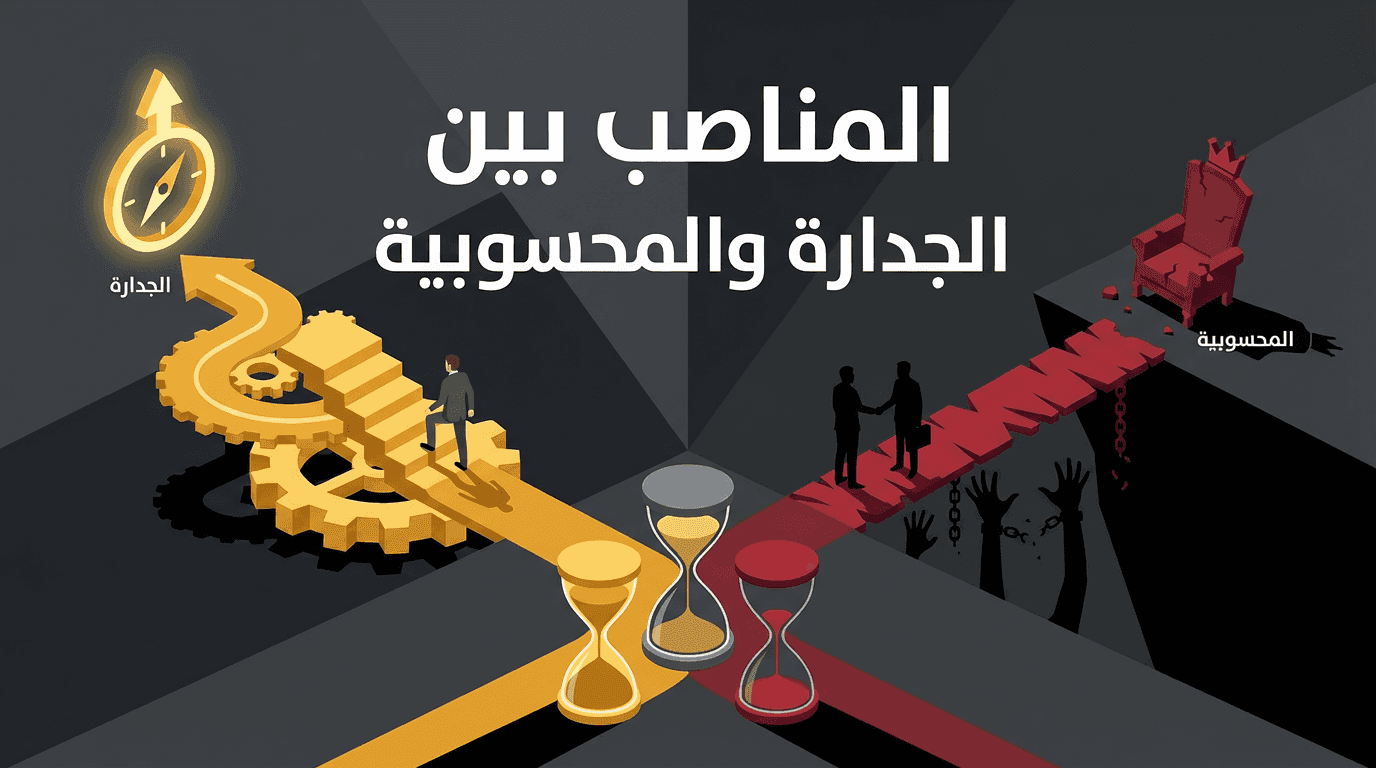
Positions Between Meritocracy and Nepotism: A Critical Reading of Equal Opportunity
In the business world, many adopt a simplified narrative suggesting that high positions are only attained by those who deserve them. This narrative grants organizations an ideal image of fairness and meritocracy, yet it is often far from reality. Daily experiences reveal that promotion paths are not always the byproduct of competence alone; rather, they are influenced by hidden factors such as nepotism, internal alliances, and even unannounced biases.
To claim that everyone who reached a leadership position fully deserved it is a flawed oversimplification. Just as assuming that whoever did not reach a position was unfit carries an implicit injustice. The truth is more complex: the business environment does not operate purely on the logic of merit, but through an interconnected system of relationships, opportunities, and politics.
Nepotism as a Structural Barrier
Nepotism is not merely a passing individual practice; it is a structural barrier that threatens institutional efficiency. When positions are granted based on loyalty or kinship rather than capability, decision quality deteriorates, innovation weakens, and the sense of fairness erodes within teams. Worse yet, these practices produce a negative culture that reproduces itself; an employee who ascended through nepotism often reinforces the same pattern when others rise.
Conversely, organizations that lack clear mechanisms for governance and transparency become more vulnerable to entrenching this phenomenon. Whenever objective criteria are absent, unfair paths flourish, sidelining the most competent and bringing the least deserving to the forefront.
The Impact of Lack of Fairness on Individuals
When employees realize that effort and competence are insufficient for advancement, a sense of apathy or frustration is born. Some may choose a gradual withdrawal from professional ambition, while others might leave the organization in search of a more equitable environment. This loss is measured not only by the departure of talent, but by the erosion of internal trust, which represents intangible capital for any successful organization.
Remarkably, many of those who leave a real impact in organizations are not at the top. They are found in middle management or even behind the scenes, working silently and creating tangible change without reaping the fruits of formal recognition. Their absence from high positions does not mean a lack of value; rather, it exposes a flaw in the mechanisms of appreciation and selection.
Rational Leadership as a Cycle Breaker
Breaking the cycle of nepotism requires conscious leadership that realizes professional legitimacy is built on fairness. Leadership is not a privilege granted, but a responsibility placed upon those who prove their ability to deliver impact. The existence of transparent systems for evaluation and promotion, with clear criteria applied to everyone without exception, is what ensures that positions are awarded based on merit rather than loyalty.
Transparency here is not merely a moral value, but a strategic necessity. Organizations that consecrate fairness in their choices build long-term trust capital, attract talent, and increase their competitiveness in a market full of challenges.
Redefining Success
A true critique of the reality of positions leads us to a fundamental question: Do we measure success by job title alone, or by the actual impact an individual leaves on the organization and society? Limiting success to the title as the sole metric reinforces illusions and overlooks the true value of contribution.
On the other hand, when organizations redefine success as "making a tangible difference," they become more capable of utilizing all their organizational levels. Here, a position is no longer an end in itself, but a means to empower impact and achieve sustainability.
A Critical Summary
Not everyone who climbed to a position arrived there through merit, and not everyone who remained outside of it is unqualified. Acknowledging this truth is not pessimism, but a necessary critical awareness. It opens the door for deep reform in organizational culture, shifting it from the logic of "position" to the logic of "impact."
Ultimately, the organizations that succeed are not those that merely master the distribution of positions, but those that do justice to their talents and ensure that leadership is a reflection of true merit, not nepotism. This is the precise point that distinguishes an organization spinning in a closed loop from one creating a sustainable impact.