

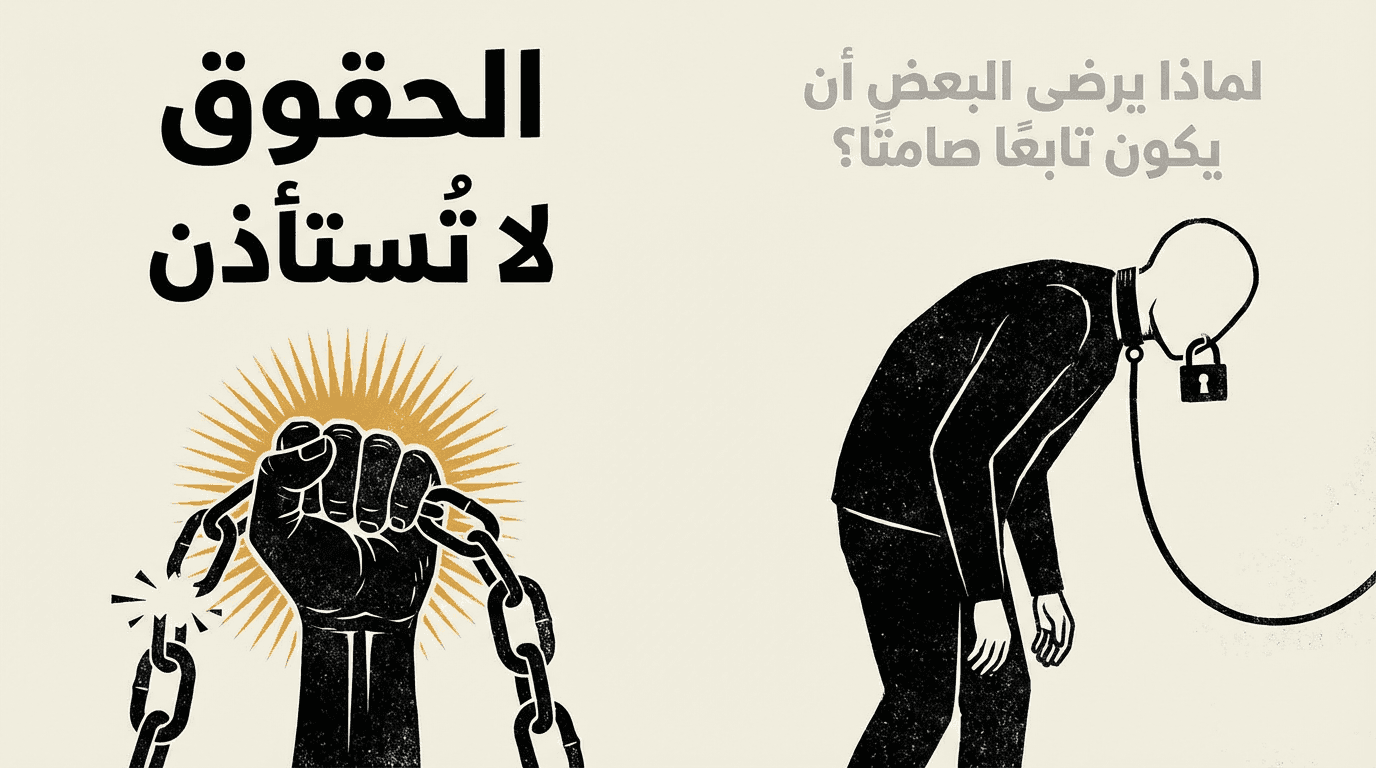
Rights Require No Permission: Why Do Some Settle for Being Silent Followers?
In an office bustling with tasks, an employee sat staring intently at his screen, while his eyes were actually chasing an endless internal dialogue. He faced a situation that seemed simple to others, but for him, it was a difficult test: should he speak up for his right, or remain silent and move on as if nothing happened?
The story wasn't about a financial privilege or an extra demand; it was about an ordinary matter guaranteed by the system—something supposed to be self-evident. Yet, he chose to swallow his voice. Here the question begins: Why do some settle for being silent followers, even in the face of their simplest rights?
The Tale of the Silent Employee
This employee had worked for years in the same institution. He knew the details of the regulations as well as he knew his own desk; he understood perfectly what was a right and what was a favor. However, whenever he found himself in a situation requiring him to demand something, he preferred to keep it bottled up inside. He justified it by saying he "didn't want trouble," "wanted to be liked," or that "silence is sometimes smarter than speech."
Over time, this was no longer a passing occurrence; it became a deep-seated habit. He began justifying giving up one right after another until the matter became a form of self-conditioning for submission. When he looked around, he found that his silence had not earned him the appreciation he expected; instead, it solidified his image as the person who accepts anything.
Submission that Breeds Exploitation
When an employee remains silent about their rights, they open the door to an entire environment of exploitation. This isn't necessarily because the management intends to be unjust, but because silence is often interpreted as consent. As these situations repeat, this presumed consent becomes the basis for interaction. This is where the imbalance is born: not from the system or the institution alone, but from a culture of submissiveness that some employees impose upon themselves.
At this moment, the employee becomes part of the problem rather than part of the solution. They do not confront injustice or set clear boundaries; instead, they leave themselves hostage to the interpretations of others. Thus, a vicious cycle is established: submission breeds exploitation, and exploitation reinforces submission.
Why Do We Stay Silent About Our Rights?
The answer is not singular, but it often begins with fear. Fear of losing favor, fear of negative perception, and the fear that demanding a right will be calculated as rebellion. There is also the "complacency complex"—when a person convinces themselves that conceding is a form of wisdom or humility, while in reality, it is a weakness that gradually erodes their value.
Surprisingly, this silence may not protect the employee at all. On the contrary, it might put them at a disadvantage when opportunities arise. Institutions do not bet on those who do not see themselves as deserving; they bet on those who know their value and express it with respect and clarity.
The Impact of Silence on the Institutional Environment
The matter is not limited to the individual. A work environment filled with silent people gradually turns into one weighed down by indifference. The employee who stays silent about their right today sends an implicit message to their colleagues that silence is better than speech. Thus, the contagion of submission spreads until it becomes a general culture.
The result? An institution that looks stable from the outside but is fragile from within. Weak productivity, low loyalty, and a general sense of injustice reflected in every small detail. In reality, change did not require major decisions; it required small voices that refuse to be silent and hold on to what is right.
Demanding Rights is Not Rebellion
There is a great confusion between demanding one's rights and rebellion. Demanding a right is a natural practice, performed by a conscious employee in a sophisticated manner that balances honesty and respect. It is an announcement that the relationship between the employee and the employer is not one of blind dependency, but a relationship based on clarity and balance.
Therefore, the institutions that truly succeed are not those that silence voices, but those that allow them to be heard—because awareness of one's rights is no less important than commitment to one's duties.
The Deeper Lesson
When we look at the silent employee in our story, we don't just see an individual who gave up a position. We see a broader picture: a small society within an institution testing its balance between rights and duties. If everyone remains silent, the scale tips. If some dare to demand, the scale regains its balance.
Here, the deeper lesson emerges: Rights require no permission. They are not a gift given to those who excel at silence, nor are they a bargaining chip for those who excel at negotiation. Rights are simply practiced—with awareness and dignity, without fear or submissiveness.
Conclusion
Silence may seem like a comfortable choice in the moment, but in reality, it is more costly than speaking up. An employee who becomes accustomed to being a silent follower loses something greater than their right: they lose their image of themselves.
The question remains hanging: Is the problem with the management that applies pressure... or with the employee who chose to remain silent and wrong themselves before others could?# Rights Require No Permission: Why Do Some Settle for Being Silent Followers?
In an office bustling with tasks, an employee sat staring intently at his screen, while his eyes were actually chasing an endless internal dialogue. He faced a situation that seemed simple to others, but for him, it was a difficult test: should he speak up for his right, or remain silent and move on as if nothing happened?
The story wasn't about a financial privilege or an extra demand; it was about an ordinary matter guaranteed by the system—something supposed to be self-evident. Yet, he chose to swallow his voice. Here the question begins: Why do some settle for being silent followers, even in the face of their simplest rights?
The Tale of the Silent Employee
This employee had worked for years in the same institution. He knew the details of the regulations as well as he knew his own desk; he understood perfectly what was a right and what was a favor. However, whenever he found himself in a situation requiring him to demand something, he preferred to keep it bottled up inside. He justified it by saying he "didn't want trouble," "wanted to be liked," or that "silence is sometimes smarter than speech."
Over time, this was no longer a passing occurrence; it became a deep-seated habit. He began justifying giving up one right after another until the matter became a form of self-conditioning for submission. When he looked around, he found that his silence had not earned him the appreciation he expected; instead, it solidified his image as the person who accepts anything.
Submission that Breeds Exploitation
When an employee remains silent about their rights, they open the door to an entire environment of exploitation. This isn't necessarily because the management intends to be unjust, but because silence is often interpreted as consent. As these situations repeat, this presumed consent becomes the basis for interaction. This is where the imbalance is born: not from the system or the institution alone, but from a culture of submissiveness that some employees impose upon themselves.
At this moment, the employee becomes part of the problem rather than part of the solution. They do not confront injustice or set clear boundaries; instead, they leave themselves hostage to the interpretations of others. Thus, a vicious cycle is established: submission breeds exploitation, and exploitation reinforces submission.
Why Do We Stay Silent About Our Rights?
The answer is not singular, but it often begins with fear. Fear of losing favor, fear of negative perception, and the fear that demanding a right will be calculated as rebellion. There is also the "complacency complex"—when a person convinces themselves that conceding is a form of wisdom or humility, while in reality, it is a weakness that gradually erodes their value.
Surprisingly, this silence may not protect the employee at all. On the contrary, it might put them at a disadvantage when opportunities arise. Institutions do not bet on those who do not see themselves as deserving; they bet on those who know their value and express it with respect and clarity.
The Impact of Silence on the Institutional Environment
The matter is not limited to the individual. A work environment filled with silent people gradually turns into one weighed down by indifference. The employee who stays silent about their right today sends an implicit message to their colleagues that silence is better than speech. Thus, the contagion of submission spreads until it becomes a general culture.
The result? An institution that looks stable from the outside but is fragile from within. Weak productivity, low loyalty, and a general sense of injustice reflected in every small detail. In reality, change did not require major decisions; it required small voices that refuse to be silent and hold on to what is right.
Demanding Rights is Not Rebellion
There is a great confusion between demanding one's rights and rebellion. Demanding a right is a natural practice, performed by a conscious employee in a sophisticated manner that balances honesty and respect. It is an announcement that the relationship between the employee and the employer is not one of blind dependency, but a relationship based on clarity and balance.
Therefore, the institutions that truly succeed are not those that silence voices, but those that allow them to be heard—because awareness of one's rights is no less important than commitment to one's duties.
The Deeper Lesson
When we look at the silent employee in our story, we don't just see an individual who gave up a position. We see a broader picture: a small society within an institution testing its balance between rights and duties. If everyone remains silent, the scale tips. If some dare to demand, the scale regains its balance.
Here, the deeper lesson emerges: Rights require no permission. They are not a gift given to those who excel at silence, nor are they a bargaining chip for those who excel at negotiation. Rights are simply practiced—with awareness and dignity, without fear or submissiveness.
Conclusion
Silence may seem like a comfortable choice in the moment, but in reality, it is more costly than speaking up. An employee who becomes accustomed to being a silent follower loses something greater than their right: they lose their image of themselves.
The question remains hanging: Is the problem with the management that applies pressure... or with the employee who chose to remain silent and wrong themselves before others could?