

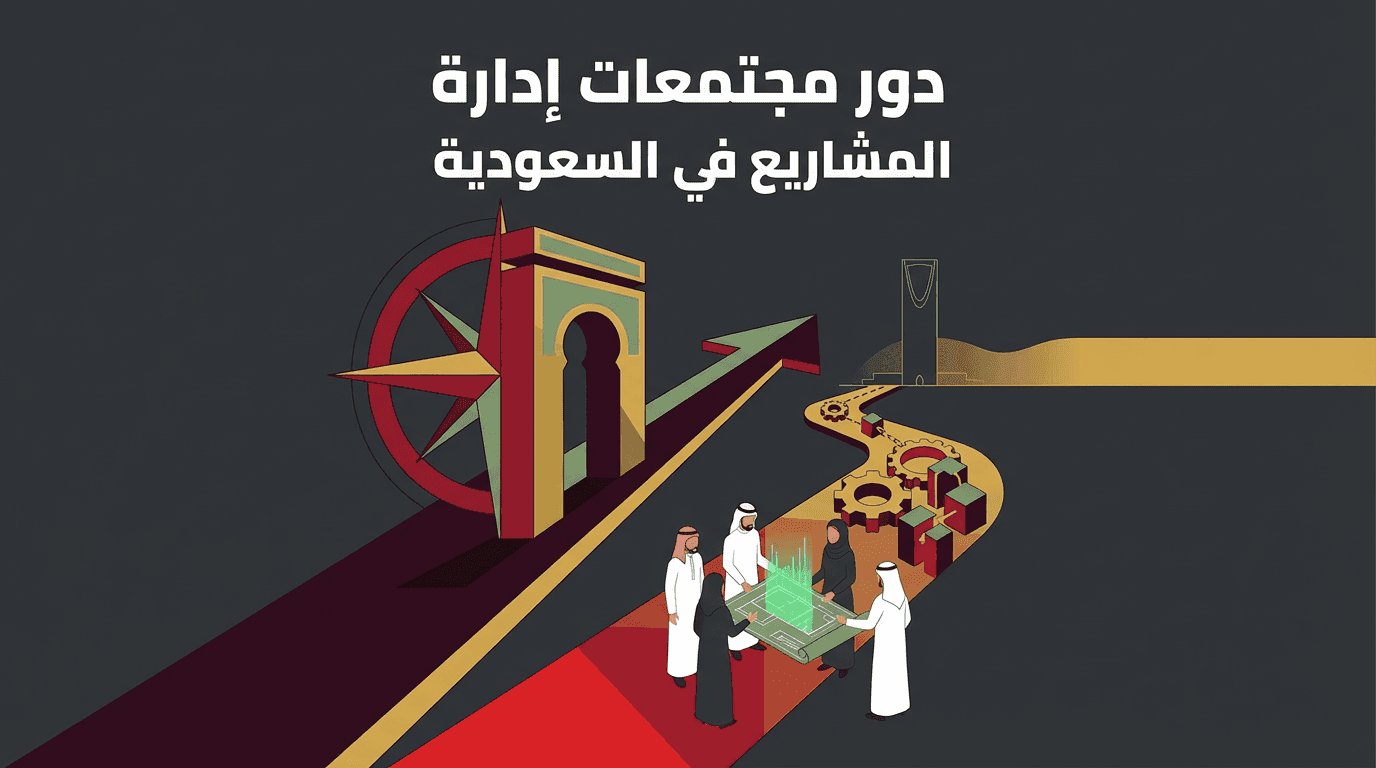
In light of the rapid economic and developmental transformations taking place in the Kingdom of Saudi Arabia, project management has become a fundamental strategic element for achieving the objectives of Vision 2030. With the accelerating pace of mega-projects across infrastructure, culture, education, and digital transformation, the importance of project management communities emerges as an empowering factor for both individuals and organizations alike. These communities are not confined merely to education; they also encompass building a professional culture, fostering innovation, and achieving tangible, sustainable outcomes.
1. Enhancing Professional Capabilities
Project management communities provide a comprehensive learning environment for professionals through:
- Specialized Workshops: Covering the latest global practices such as risk management, strategic planning, and time management tools.
- Seminars and Lectures: Highlighting real-world challenges and offering practical, applicable solutions for local work environments.
- Digital Resources and Interactive Tools: Enabling members to engage in continuous learning, test their skills, and keep pace with recent developments in the project management field.
Through continuous participation, professionals are able to elevate their level of professionalism, develop leadership skills, and apply innovative solutions within their organizations.
2. Building a Strong Network of Relationships
Professional networks are a cornerstone of success in mega-projects, and these communities work on:
- Facilitating Communication Across Different Sectors: Whether government, private, or non-profit.
- Exchanging Ideas and Practical Experiences: Including real-world case studies, success stories, and overcome challenges.
- Creating Collaboration Opportunities and Strategic Partnerships: Helping to integrate resources and expertise to achieve project goals faster and more efficiently.
The presence of a robust professional network contributes to enhancing career growth opportunities for individuals and raising the efficiency of organizations in managing complex projects.
3. Supporting Youth and National Talents
Professional communities serve as a vital platform to empower youth to acquire the skills necessary for future leadership:
- Mentorship and Career Guidance Programs: Providing guidance from project experts to beginners and young professionals.
- Volunteering Initiatives and Small Projects: Giving youth the opportunity to apply their theoretical knowledge in practical, real-world situations.
- Advanced Training Workshops: Aimed at developing strategic thinking, decision-making skills, and the capability to manage diverse teams.
Through these initiatives, a generation of leaders is prepared, capable of heading mega-projects and contributing to delivering innovative and sustainable solutions for organizations and society.
4. Advancing Project Quality and Achieving Results
Standardized practices and professional initiatives provided by these communities help organizations to:
- Improve Strategic Planning: To ensure the clarity of objectives and required resources.
- Raise Execution Efficiency: Through the application of professional project management methods and performance monitoring techniques.
- Continuous Monitoring and Control: To mitigate risks and achieve adherence to timelines and quality standards.
- Performance Evaluation and Future Process Improvement: Through case studies and data analysis.
These measures lead to higher quality projects, lower risks, and more efficient realization of targeted outcomes.
5. Supporting National Transformation and Sustainability
Professional communities play an essential role in national transformation projects, including:
- Major Infrastructure: Such as transit projects and vital utilities.
- Cultural and Educational Fields: By supporting e-learning projects, vocational training, and cultural initiatives.
- Economic and Social Development: By enhancing the efficiency of projects that achieve sustainable economic growth.
By promoting governance, accountability, and the application of professional project management methodologies, these communities contribute to creating a long-term impact on society and the economy.
6. Fostering Innovation and Digital Transformation
With the digital transformation taking place in the Kingdom, professional communities have become a space for exchanging:
- The Latest Digital Solutions in Project Management: Such as the use of advanced scheduling systems, digital collaboration tools, and smart analytics.
- Innovative Ideas: To develop new products and services, and improve workflows within organizations.
- Global Best Practices: To adopt sustainable strategies that enhance the ability of projects to adapt to future changes.
This focus on innovation ensures that projects are not limited merely to execution, but serve as an engine for sustainable evolution.
Conclusion
Project management communities in the Kingdom of Saudi Arabia represent a dynamic environment for skill development, fostering collaboration among professionals, and supporting the successful execution of strategic projects. The commitment of members to active participation, adopting best practices, and leveraging professional networks makes these communities a driving force for sustainable growth and a key asset for the success of Saudi Vision 2030.
Investing in the development of professional communities is a direct investment in the future of national projects, raising the efficiency of human capital, and promoting innovation and institutional excellence.