

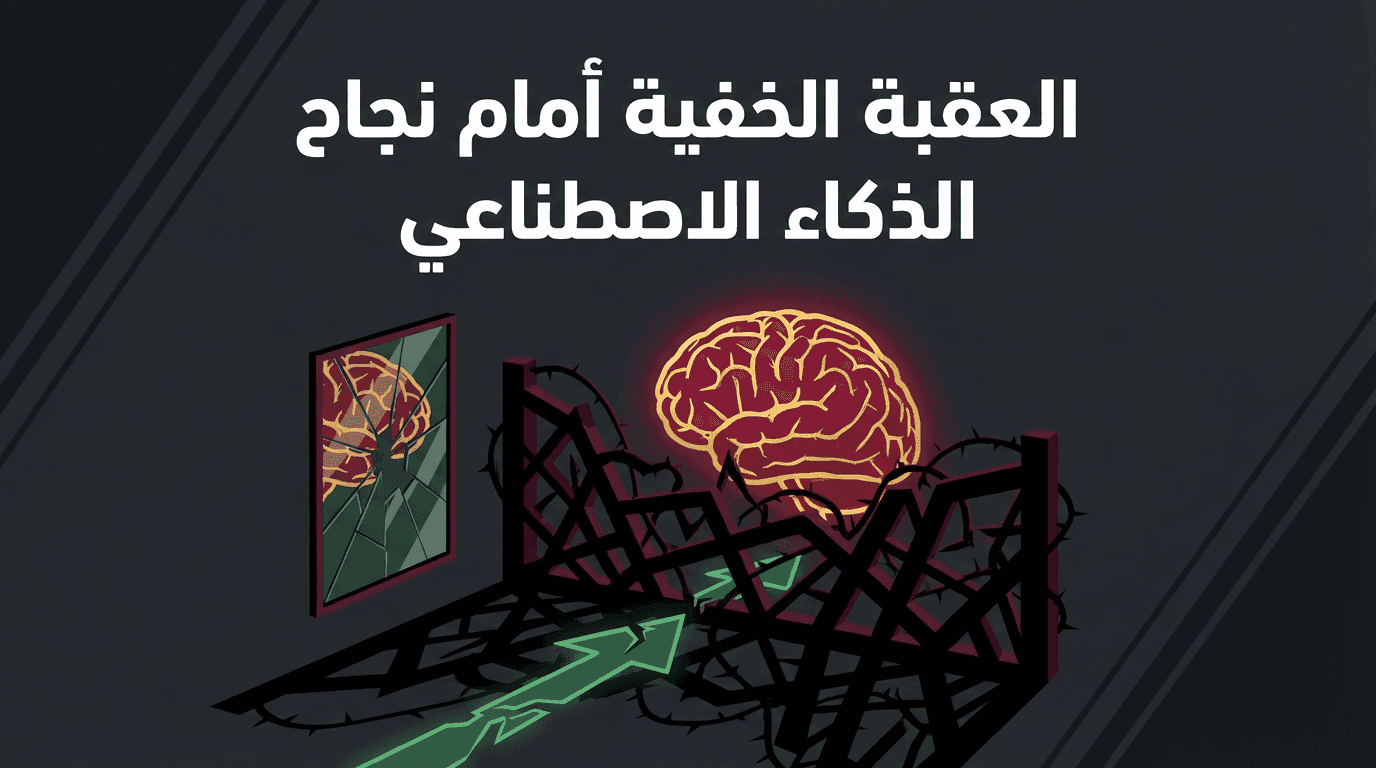
When we talk about the challenges facing artificial intelligence in organizations, what usually comes to mind are technological complexities or weak algorithmic models. However, practical experience reveals that the biggest obstacle is not technical so much as it is operational: the accumulation of "process and data debt."
This silent debt is formed from years of temporary fixes, manual procedures, and inconsistent databases. It seeps into every department in the organization—from accounting to the supply chain—becoming the primary obstacle to AI-driven digital transformation.
When Tomatoes Become a Strategic Lesson
A simple example: A company orders 1,000 kg of tomatoes, but only 950 kg arrive due to a natural loss of moisture. The traditional system flags the issue for manual review. Meanwhile, an AI built on solid foundations understands that this decrease is expected, processes the order automatically, and even adds this knowledge to its future records.
The difference here is not in the technology itself, but in the purity of the operational process that supports it.
The difference here is not in the technology itself, but in the purity of the operational process that supports it.
The Hidden Gap in Learning
Recent studies from MIT showed that 95% of AI initiatives in organizations fail to deliver real value, not because of shortcomings in the technology, but due to a weak capability to adapt to complex existing processes.
As for Gartner, it predicts that by 2030, more than 50% of AI models will be tailored to specific sectors and industries, up from just 5%. This reflects one reality: generic solutions are no longer enough.
As for Gartner, it predicts that by 2030, more than 50% of AI models will be tailored to specific sectors and industries, up from just 5%. This reflects one reality: generic solutions are no longer enough.
Process Intelligence Before Machine Intelligence
Successful AI transformations begin with clearing "process and data debt." Organizations that do this foundational work unleash the full power of AI, while others remain constrained by the legacy of the past.
Artificial intelligence will not salvage flabby processes; rather, it will stumble because of them.
Artificial intelligence will not salvage flabby processes; rather, it will stumble because of them.
What Does This Mean for Leaders?
We are entering a new era where artificial intelligence is no longer just an assistant, but a decision-maker and a manager of integrated systems. Leaders who realize this are now working on building a solid operational foundation that ensures their leadership in the future autonomy-based economy.
As the saying goes: "No artificial intelligence without operational intelligence." Companies that grasp this equation will be the true winners in the coming decade.