

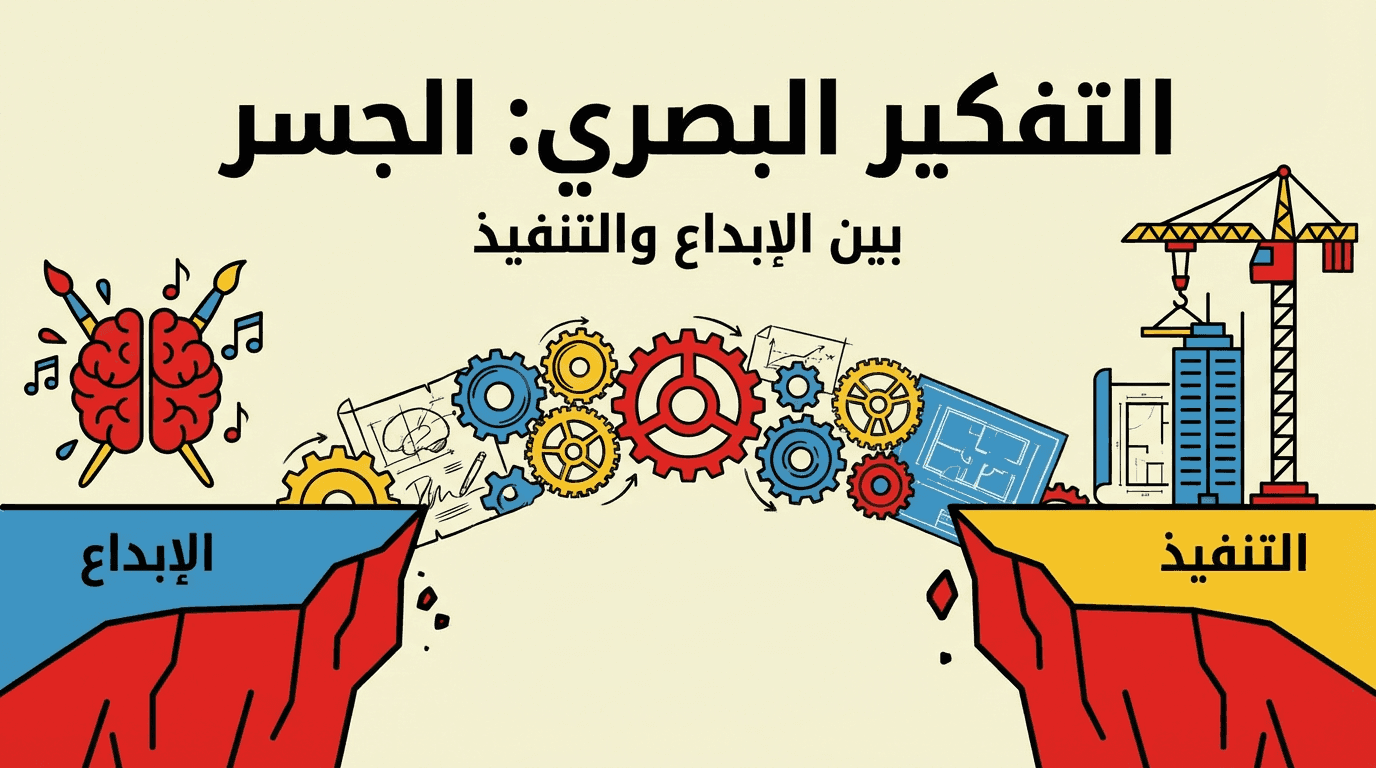
Visual Thinking as a Bridge Between Creativity and Execution
Visual thinking is not just an additional skill; it is a shift in the way we perceive information and formulate our solutions. In a world characterized by complex decisions and intertwined ideas, the ability to transform abstract concepts into tangible images becomes a decisive step toward innovation and effective execution. It is the bridge that connects the moment of artistic inspiration with the rigor of strategic planning.
The Essence of Visual Thinking
Through visual thinking, the mind transforms into an interactive space where ideas can manifest before us in the form of:
- Mind maps that clarify relationships.
- Diagrams that facilitate data presentation.
- Initial sketches that reveal hidden connections.
This approach does not only make it easier to communicate an idea to others; it provides us with greater clarity ourselves, allowing us to rearrange data in new ways that were not possible through traditional text.
More than 60% of people are visual learners, making visual thinking a powerful tool for enhancing understanding and engagement.
Visual Thinking and Innovation
In innovation, visual thinking acts as an engine for ideas:
- Mind maps and mood boards help generate diverse alternatives.
- Visual charts make it easier to evaluate options quickly.
- Illustrated models shorten long discussions and clarify core points.
This integration of imagination and management gives organizations the ability to think more broadly while simultaneously transforming vision into actionable steps.
A Strategic Tool for Leaders
The true value of visual thinking goes beyond drawing or illustration; it lies in being a strategic tool. Leaders who adopt this approach are able to:
- Formulate clearer plans.
- Communicate deeply with work teams.
- Transform complex data into easily digestible scenes.
It is a complement to analysis, not a substitute for it, as it brings strategy closer to execution and increases the credibility of decisions.
How to Master Visual Thinking?
Here are some practical ways to develop your skills:
- Daily Practice: Try drawing mind maps for your thoughts.
- Visual Note-taking: Convert your notes into quick sketches.
- Digital Tools: Use visual planning applications and interactive workboards.
Visual thinking is not exclusive to creatives; it is a skill everyone can acquire to become a daily tool in work and life.
Conclusion
Ultimately, visual thinking is the skill that enables individuals and organizations to cross from the edge of creativity to the ground of execution without losing the spark of the idea or the clarity of the goal. It is a shared language that combines imagination and analysis, and idea and strategy.