

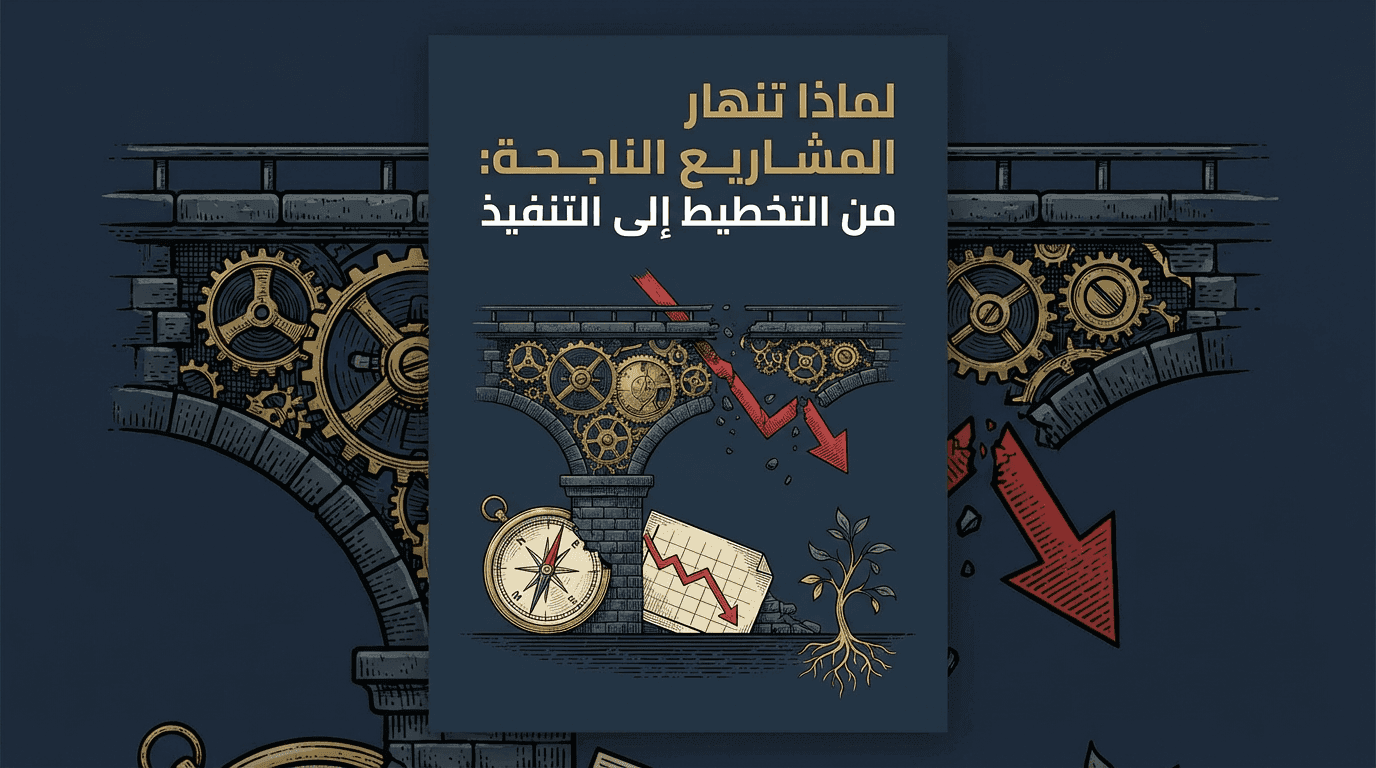
Many organizations start their projects with detailed and well-thought-out plans; however, some of these projects still end in failure or drift away from their goals. The reason is not always a lack of planning, but rather execution gaps and risk management flaws that teams often overlook. From the perspective of a Project Management Office (PMO), we can break these reasons down into four main pillars.
1. Approval Gaps
Relying on official approval without ensuring a shared understanding among all parties exposes the project to the risk of deviation from its very inception. Signing off on a plan does not necessarily mean that the team understands the objectives, or that all stakeholders are fully aware of their responsibilities and constraints.
2. Communication Chaos
The absence of clear communication channels leads to undocumented decisions and deviations from the original plans. Successful projects require continuous and unified communication, along with logging all decisions and updates, to ensure transparency and accurately track progress.
3. Fatal Assumptions
Some teams treat resources or stakeholder commitments as guaranteed certainties, rather than identifying them as potential risks. These assumptions can turn into sudden crises—such as resource delays or shifting senior management priorities—ultimately exposing the project to failure.
4. Lost Responsibilities
Failing to activate a Responsibility Assignment Matrix (RACI) leads to a duplication of tasks, wasted efforts, and a loss of oversight regarding execution. When every individual knows their exact role and there is constant tracking of deliverables, the chances of deviation or failure decrease.
The Role of the Project Management Office
Here lies the true difference: the role of the PMO is not limited to archiving plans or monitoring performance; rather, it is about protecting the project from deviation before it is too late. By guiding work teams, tracking risks, and ensuring clear responsibilities, the office can transform a solid plan into a tangible success.
Conclusion
Project success depends on much more than just good planning; it is about execution management, effective communication, assessing assumptions, and defining responsibilities. When this is achieved, projects become much more capable of reaching their objectives and delivering a sustainable professional impact.